Imagine you’re charging your phone. You plug it in, and the electricity travels from the wall socket to the battery. But here’s a dirty little secret: you aren’t getting all the power you pay for.
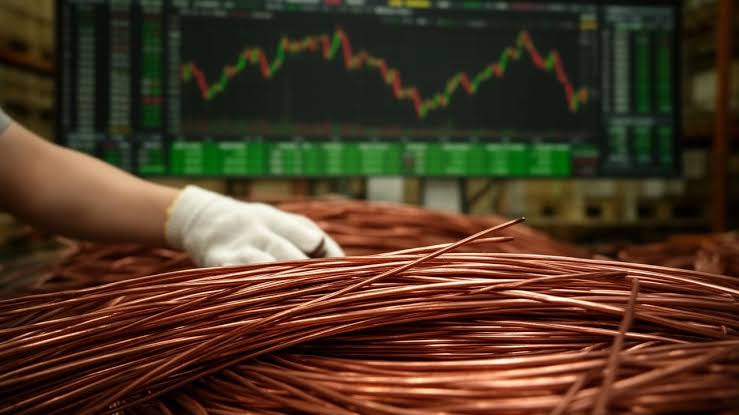
As electricity zips through the copper wires in your walls, it’s fighting a battle. Electrons are bumping into atoms, creating friction, and losing energy as heat. This is why your laptop charger gets warm. It’s called resistance. And in a country like India, where we are constantly trying to bridge the gap between power generation and consumption, this “leakage” is a massive headache.
But what if we could build a wire where electrons don’t bump into anything at all? A wire where electricity flows forever, without losing a single watt?
Welcome to the world of Superconductivity.
Table of Contents
The “VIP Lane” for Electrons
In a normal conductor (like the copper wiring in your house), electrons are like a crowd of people trying to run through a packed Mumbai local train station at rush hour. They keep bumping into each other and into the pillars (atoms), losing energy and slowing down.
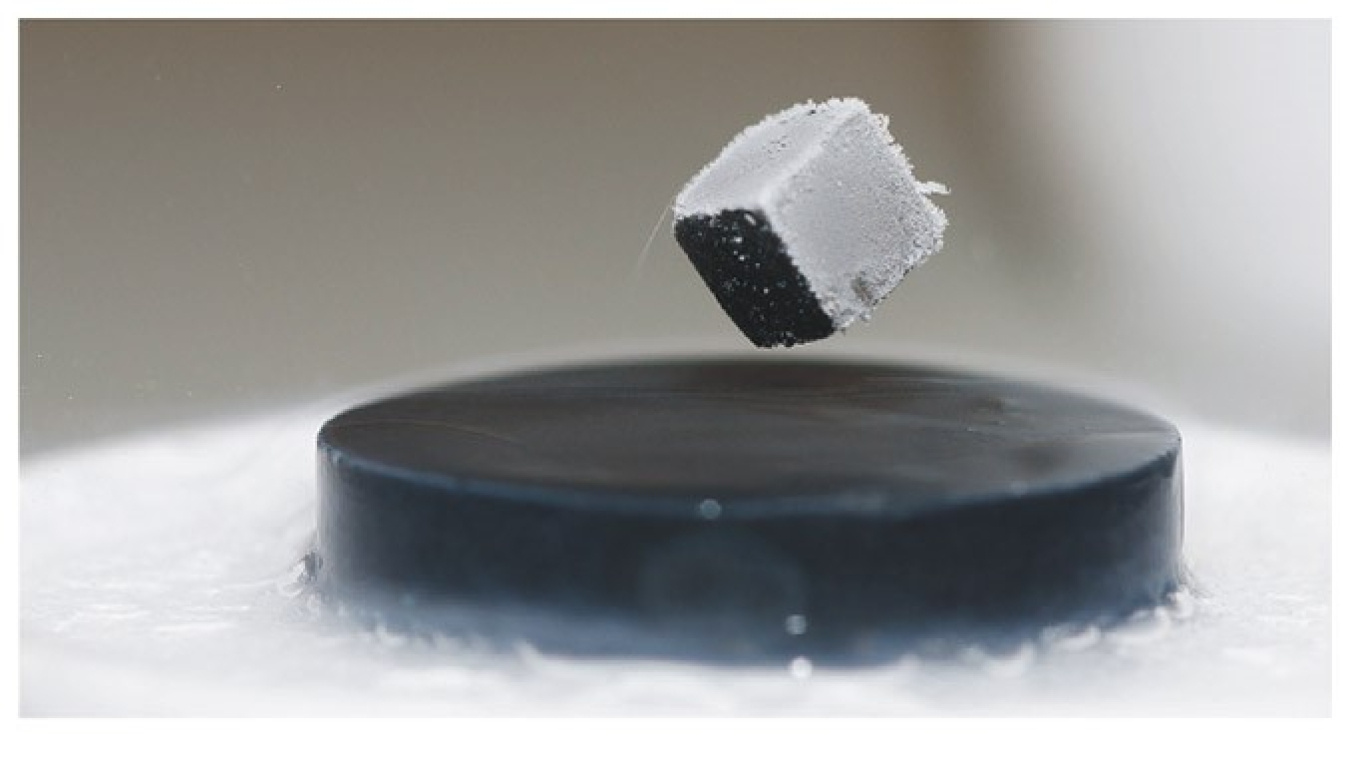
In a superconductor, below a certain “critical temperature,” something magical happens. The electrons pair up (these are called Cooper pairs) and link arms. Instead of bumping into the atoms, they glide through the lattice structure as if the station were completely empty.
The Result: Zero resistance. A current started in a superconducting loop can flow forever without a battery connected to it.
Why Should India Care? (The “If We Find One” Scenario)
The “Catch” is that current superconductors only work at extremely cold temperatures (often close to -273°C), making them expensive to maintain. But if we find a material that works at room temperature, the impact on India would be revolutionary.
Here are four ways it would change the game:
1. The End of Power Cuts (and High Bills)
India has some of the highest transmission and distribution (T&D) losses in the world—historically hovering around 17-20%. That means nearly a fifth of the electricity generated is lost as heat before it reaches your home.
- The Indian Example: Imagine the National Grid connecting the solar farms of Rajasthan to the tech hubs of Bengaluru. With superconductors, we could transmit power over thousands of kilometers with zero loss. No more voltage drops at the end of the line, and no more “load shedding.”
2. MRI Machines: From Luxury to Accessible
Currently, MRI machines rely on superconductors cooled by liquid helium (which is rare and expensive). This is why an MRI scan in a private Indian hospital can cost ₹5,000–₹10,000.
- The Change: A room-temperature superconductor would mean cheaper, lighter MRI machines that don’t need massive cooling plants. This could allow every district hospital in India to have an MRI, making diagnostics affordable for the common man.
3. Maglev Trains: The 500 km/h Commute
India is currently building bullet trains. But Maglev (Magnetic Levitation) trains are different—they float on magnetic fields, eliminating friction entirely.
- The Indian Example: Imagine a Delhi to Jaipur commute. It’s roughly 280 km. By road, it takes 5 hours. By a Maglev train using superconducting magnets, you could cover that distance in under 30 minutes, gliding silently above the tracks. This technology could redefine how we travel between our metros.
4. The Quantum Leap
Quantum computers are the future of drug discovery and material science, but they are incredibly unstable. Superconductors are the backbone of the “qubits” (quantum bits) that power these machines. A room-temperature superconductor would make quantum computing stable enough to solve problems—like designing new medicines—that would take a normal computer billions of years to figure out.
The Hunt is On
The race to find a “Room-Temperature Superconductor” is the Holy Grail of physics. It’s like the modern-day space race. While we aren’t there yet, every breakthrough brings us closer to a world where energy is free-flowing and technology is limitless.
So, the next time you feel your phone getting hot while charging, remember: we are still living in the “friction” age. The Superconducting Age is waiting to be unlocked.